01
Cinematic short
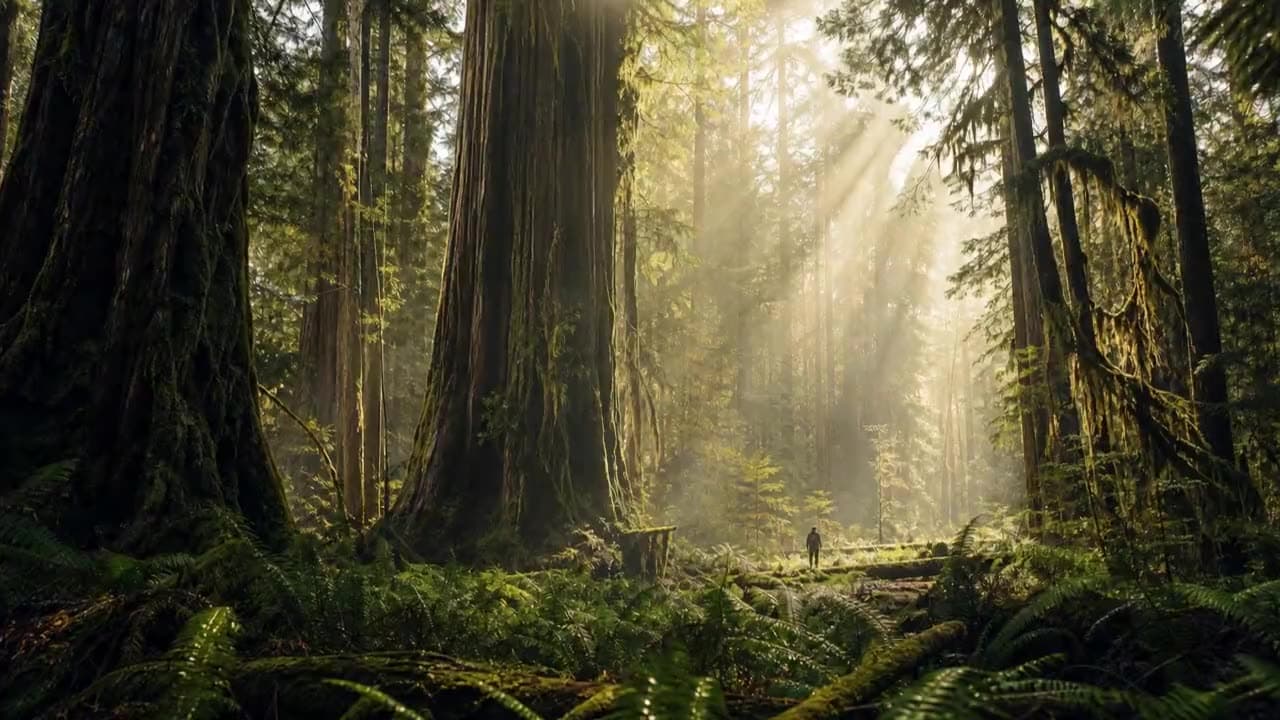
Cinematic establishing shot of a lone figure walking down a neon-lit rainy street at night, anamorphic lens flares, atmospheric haze, dramatic film color grade, photorealistic, film grain
AI Video Generator
Generate AI video with Pixverse V6: text to video and image to video, all from one Vidney workspace.
Output
Real Pixverse V6 output, generated on Vidney. These are actual results, not stock or fabricated examples.
Cinematic establishing shot of a lone figure walking down a neon-lit rainy street at night, anamorphic lens flares, atmospheric haze, dramatic film color grade, photorealistic, film grain
A friendly young creator holding up a sleek consumer product to the camera in a bright modern room, speaking energetically, handheld UGC advertising style, natural daylight, authentic and relatable
A person performing a fun trendy dance with dynamic energetic camera movement, vibrant colorful social-media short-form aesthetic, upbeat and shareable, vertical framing
An old family photograph gently coming to life with subtle natural motion — a smiling grandparent slowly turning their head, warm nostalgic golden light, gentle and emotional, photorealistic
One plain-language prompt returns a finished video: no timeline, no keyframes, no rendering software. Tweak a few words and re-run in seconds.
Aspect ratios like 1:1, 4:3, 3:4, 16:9, 9:16 drop cleanly into any feed, and the look holds steady across a whole series, so a multi-clip campaign reads as one brand.
Sharp detail, stable motion, accurate color, and no Vidney watermark. Clips run 1–15 seconds, ready for an ad slot or a client deliverable as-is.
Pixverse V6 runs text to video and image to video next to every other major model: one workspace, one credit balance, no API keys.
Spin up ten hook variations in one afternoon, A/B test against real spend, and double down on the winner. No shoot, no crew, no studio booking.
Batch a week of Reels and Shorts in one session. The look stays consistent across the series, so your feed reads as one brand.
Show every product in use, in a setting, from the angle that converts, and refresh creative as fast as inventory turns.
Test framing, lighting, and pacing in a few prompts. Pitch a moving look-and-feel before the budget is locked.
How the model works, based on public documentation and sourced evidence.
PixVerse is developed by AIsphere, a Beijing based AI video company, and the model family has been built on a Diffusion Transformer (DiT) architecture since V2 in 2024, with third party technical write-ups describing recent versions as a hybrid diffusion transformer design. AIsphere has not published a formal technical report for V6, so architecture details beyond this lineage remain undisclosed.
V6, released on March 30, 2026, focuses on shot execution and multi-shot storytelling. Camera movements such as tracking shots, perspective shifts and environmental reveals render with fewer artifacts than previous releases, character emotion and body language hold more reliably across scene changes, and physical interactions between objects behave with improved realism. The headline feature is generating multi-shot short films with native, synchronized audio from a single prompt, with coherent sound across the whole sequence rather than per clip scoring.
In practical terms, V6 generates clips of 1 to 15 seconds at 360p up to 1080p in aspect ratios including 16:9, 9:16, 1:1, 4:3 and 3:4, and adds multilingual text rendering inside frames (English, Chinese and other languages). It is also exposed through a command line interface aimed at developer and agentic workflows, compatible with coding agents like Claude Code and Cursor. On the Artificial Analysis image-to-video leaderboard it debuted in the top five with an Elo around 1,320.
AIsphere openly acknowledges limits: precise directional control in complex scenes and consistency across large spatial changes are still evolving. Output caps at 1080p and 15 seconds, so longer or 4K work needs other tools, and reviewers note complex action and multilingual dialogue still require review and retries. No public documentation describes C2PA or invisible watermarking for V6 outputs.
Sources: pixverse.ai · prnewswire.com · artificialanalysis.ai
Pixverse V6 fits anyone who needs videos fast without a production crew or a freelancer budget. Performance marketers use it to batch ad creative: a DTC team spins up a dozen hook variations for a single TikTok campaign and A/B tests them the same afternoon. Social media managers turn one content calendar into a week of Reels and Shorts without booking a videographer. E-commerce sellers generate product demos and lifestyle shots for Amazon, Etsy, and Shopify listings, refreshing creative as fast as inventory turns over. UGC creators and affiliates mock up native-looking spots for brand deals before committing to a shoot. Indie filmmakers and game studios pre-visualize scenes, testing framing, lighting, and pacing, to lock a direction before spending real money on production. On Vidney you run Pixverse V6 next to every other major model, so you choose the best one per project instead of locking into a single provider.
Create AI video with Pixverse V6 on Vidney in three steps.


Specs side by side with similar models, all runnable on Vidney.
| Pixverse V6 | Vidu Q4 Preview | Grok Imagine Video 1.5 | Grok Imagine Video 1.5 Lite | |
|---|---|---|---|---|
| Task modes | Text to Video · Image to Video | Image to Video · Reference to Video | Text to Video · Image to Video · Reference to Video | Text to Video · Image to Video |
| Duration | 1–15 seconds | 3–16 seconds | 1–15 seconds | 1–15 seconds |
| Resolution | 360p · 540p · 720p · 1080p | 540p · 720p · 1080p · 2K · 4K | 480p · 720p · 1080p | 480p · 720p · 1080p (upscaled from 720p) |
| Audio | Supported | Supported | Included, always on | Included, always on |
| Cost | 10–75 credits per generation | 159 credits per generation | 18 credits per generation | 18 credits per generation |
Recurring themes from public reviews, comparisons and creator write-ups. Both the good and the bad.
Creators consistently praise V6's speed and cost efficiency: clips typically render in 30 to 60 seconds and cost roughly $0.04 per second at 720p, which makes high volume iteration on short form video practical.
The multi-shot generation with native audio draws frequent positive comments, since one prompt can yield a coherent mini film with synchronized sound instead of stitching clips and adding audio by hand.
Reviewers comparing it against Kling and Veo often single out its anime and stylized output, noting that character details like ears, tails and accessories stay on model across shots better than rivals.
A common complaint is the credit system: failed or off prompt generations still consume credits, there is no preview before being charged, and unused subscription credits do not roll over at renewal.
Some users also report weak facial reproduction and inconsistent character rendering on realistic humans, with complex scenes often needing multiple paid retries.
More AI video models you can run on Vidney.
The lighter Grok video model: sound in every clip, a quicker turnaround and a cheaper 720p.
Generate AI video with Seedance 1.5 Pro: text to video and image to video, all from one Vidney workspace.
Write the scene, the lines and the sound, and Shengshu's Q3 returns all three together, from one second to sixteen.
Generate AI video with MiniMax H3 Max: text to video and image to video, all from one Vidney workspace.
Generate AI video with Kling 3.0: text to video and image to video, all from one Vidney workspace.
Generate AI video with Seedance 2.0: text to video and image to video, all from one Vidney workspace.
Pixverse V6 is an AI video model you can run on Vidney. It supports text to video and image to video from a single workspace.
Pixverse V6 costs 10–75 credits per generation. The exact credit cost is shown on the generate button before you run it. That is about $0.30–$2.25 per run at the Starter plan rate ($0.03 per credit).
Pixverse V6 supports the following aspect ratios: 1:1, 4:3, 3:4, 16:9, 9:16.
Pixverse V6 generates clips of 1–15 seconds.
Yes. Pixverse V6 can generate video with an audio track, and you can toggle sound on or off before generating.
You can start with Pixverse V6 for free on Vidney using your sign-up credits, no card required to try it. After that each run costs 10–75 credits per generation, and the exact cost is always shown on the generate button before you spend a credit.
Yes. The videos you generate with Pixverse V6 on Vidney are yours to use in commercial projects: ads, social posts, client work, and product content. You keep the output; Vidney only handles generation and storage.
Only on the free plan. Free-plan downloads carry a small Vidney watermark; on any paid plan, Pixverse V6 videos download clean, ready to publish or hand to a client. Upgrading also removes the watermark from videos you already made.
The closest Pixverse V6 alternatives on Vidney are Vidu Q4 Preview, Grok Imagine Video 1.5, and Grok Imagine Video 1.5 Lite. They all run in the same workspace from one credit balance, so you can run the same prompt on each and compare the results side by side.
No. Vidney runs Pixverse V6 for you, so there are no API keys to manage and no separate provider account to set up.