
Qwen Image vs Nano Banana 2 vs Seedream 5.0 Lite: which is better? 11 prompts tested
Published 2026-08-26 · Data measured 2026-08-26 · Updated 2026-09-05
Qwen Image is the newest arrival in our image catalog, and it is also the most expensive of the three models in this test: 12 credits per image against 9 for Seedream 5.0 Lite and 3 for Nano Banana 2 at 1K. The question this article answers is blunt: does the dearest model earn its premium? We ran the same 11 prompts through all three, on the exact routes we ship to users, and published every one of the 33 results below without cherry-picking.
Price update, 2026-09-05. When this test ran, Nano Banana 2 cost 9 credits and only shipped at 1K. It has since dropped to 3 credits at 1K and gained 2K and 4K tiers at 5 and 8 credits; Qwen Image (12 credits, 1024px) and Seedream 5.0 Lite (9 credits, 2048px) are unchanged. Every image, score and timing below is still from the original August runs, and we have not measured Nano Banana 2 at 2K or 4K.
One version note before the scores, because the name is doing a lot of work in 2026. What we host is qwen-image, the original open-weights release that Alibaba shipped in August 2025. Qwen Image 2.0 and 3.0 exist, are newer, and are not what this article measures. If a comparison you read elsewhere sounds much more flattering, check which generation it tested.
TL;DR
- Qwen Image wins exactly two rounds, and one of them decisively. Chinese text rendering (a flawless brush-calligraphy poster while Nano Banana 2 misspelled a character) and the product shot (the most believable object of the three, with no invented branding).
- It is the only model of the three you should not use for editing. Asked to add glasses and a scarf while keeping the same face, it returned a different, much younger woman. Asked to recolor a case, it repainted the entire scene, earbuds included.
- It invents text nobody asked for. A phantom "Muple Season 1936" line on the Kyoto poster, an "Once Upon a Time" card on a children's illustration. Two of eleven rounds gained unrequested writing; both times it hurt.
- Same pixels as Nano Banana 2, four times the credits. On our default settings Qwen Image returns 1024×1024 and costs 12 credits; Nano Banana 2 returns the same 1024×1024 for 3. Seedream returns 2048×2048 for 9. On resolution per credit, Qwen loses to both.
- Seedream 5.0 Lite is still the spec-follower. Only model to count three sunflower pots correctly, best flat poster, best watercolor, best anamorphic streak. Its portraits still look painted.
- Nano Banana 2 is still the photographer. Most photographic portrait and street shot, pixel-faithful edits, but it wrote the wrong Chinese character and keeps putting posters inside mock-up frames.
The setup
| Qwen Image | Seedream 5.0 Lite | Nano Banana 2 | |
|---|---|---|---|
| Developer | Alibaba (Qwen team) | ByteDance | |
| Price on Vidney | 12 credits | 9 credits | 3 credits at 1K (5 at 2K, 8 at 4K) |
| Output at default settings | 1024×1024 | 2048×2048 | 1024×1024 |
| Aspect ratio sent | 1:1 | 1:1 | 1:1 |
| Single-image latency | 23s and 41s on solo runs | 26s solo; 25s to 112s batched | 33s solo; 35s to 76s batched |
| Success rate | 11 of 11 | 11 of 11 | 11 of 11 |
Round by round
Every prompt is printed in full so you can reproduce the run. In every grid: left is Qwen Image, center is Seedream 5.0 Lite, right is Nano Banana 2.
1. Portrait: Qwen shows up ready
Close-up portrait of a woman in her 40s with freckles and silver hoop earrings, soft window light from the left, shallow depth of field, 85mm lens, natural skin texture, no retouching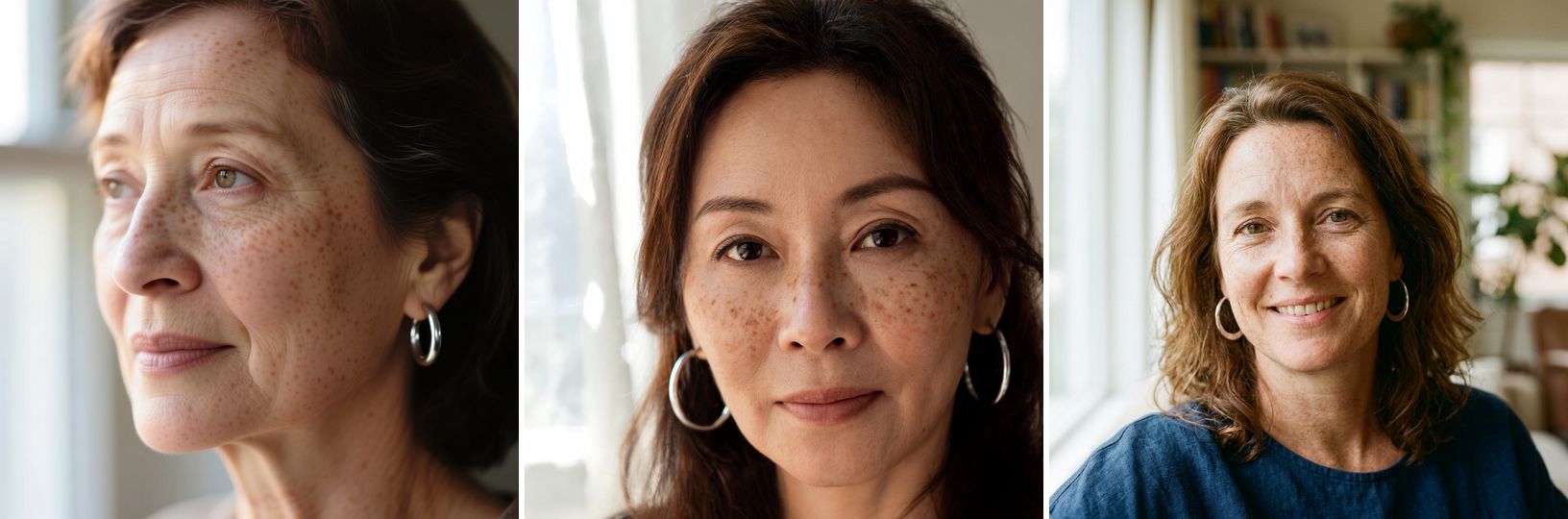
The surprise of the set. Qwen's three-quarter profile, believable middle-aged skin and directional window light make the strongest single frame here, and it is the only model that let the subject look away from the camera. Nano Banana 2 still wins pure photographic credibility, but it ignored "close-up" again. Seedream followed the framing and lost the realism.
2. Text rendering: Qwen adds a line nobody wrote
A vintage travel poster for Kyoto with the exact headline "KYOTO IN AUTUMN" at the top and the words "Maple Season 2026" at the bottom, flat illustration, red and gold palette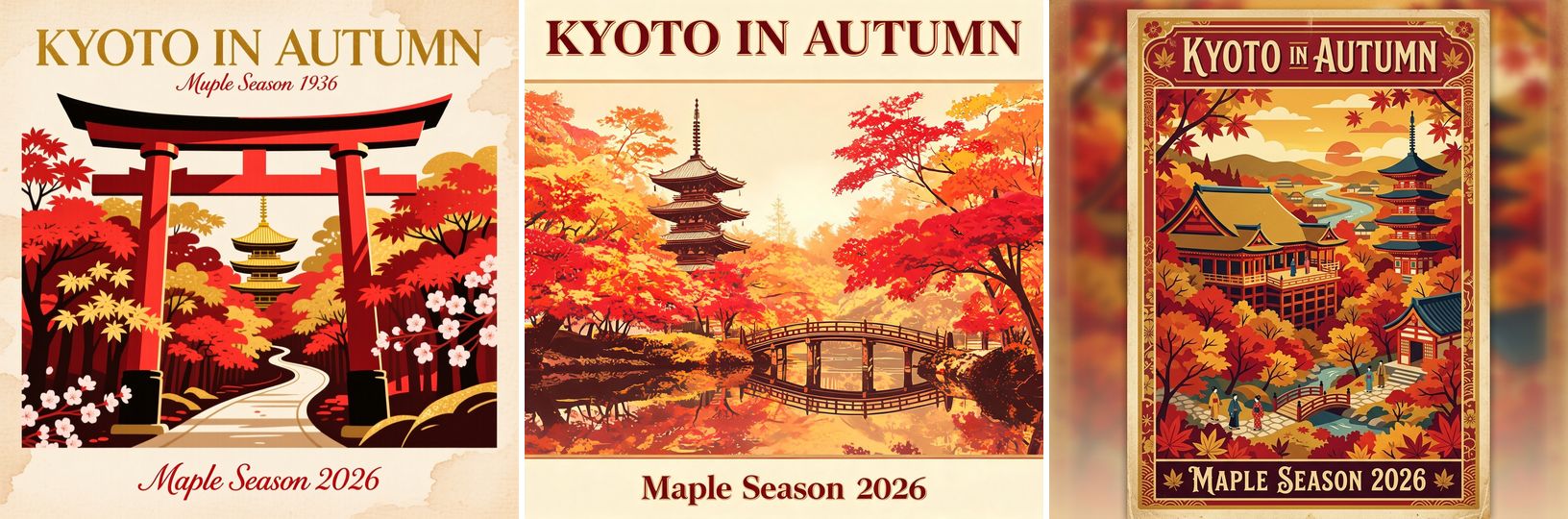
This was supposed to be Qwen's home turf, and the required text is indeed perfect. The problem is the unrequested text: a phantom subtitle with a misspelled word and a wrong date, printed in the most prominent spot of the poster. A poster you must retouch is a poster you did not get. Seedream's output is the only one usable as delivered.
3. Product shot: Qwen's best photographic argument
Studio product photo of a matte black wireless earbuds case, lid open, on a white seamless background, soft gradient shadow, subtle reflections on the glossy inner lid, e-commerce style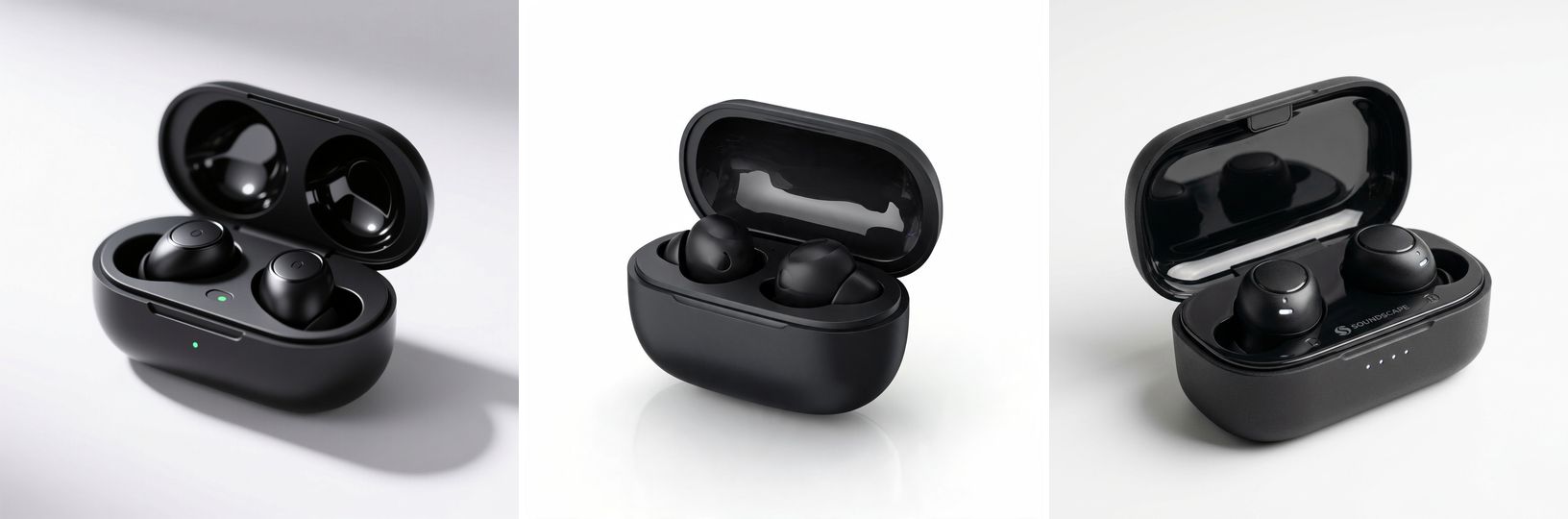
Qwen wins this one on the merits: the object is credible, the materials read as plastic rather than render, and unlike Nano Banana 2 it did not stamp a fictional brand on the lid. If your listing pipeline cannot include a logo-removal step, Qwen's frame is the only one of the three that ships as is.
4. Spatial layout: three pots, two pots, four pots
A red bicycle leaning against a blue wooden door, a ginger cat sitting on the doorstep to the left of the bicycle, three potted sunflowers on the right side, morning light, photorealistic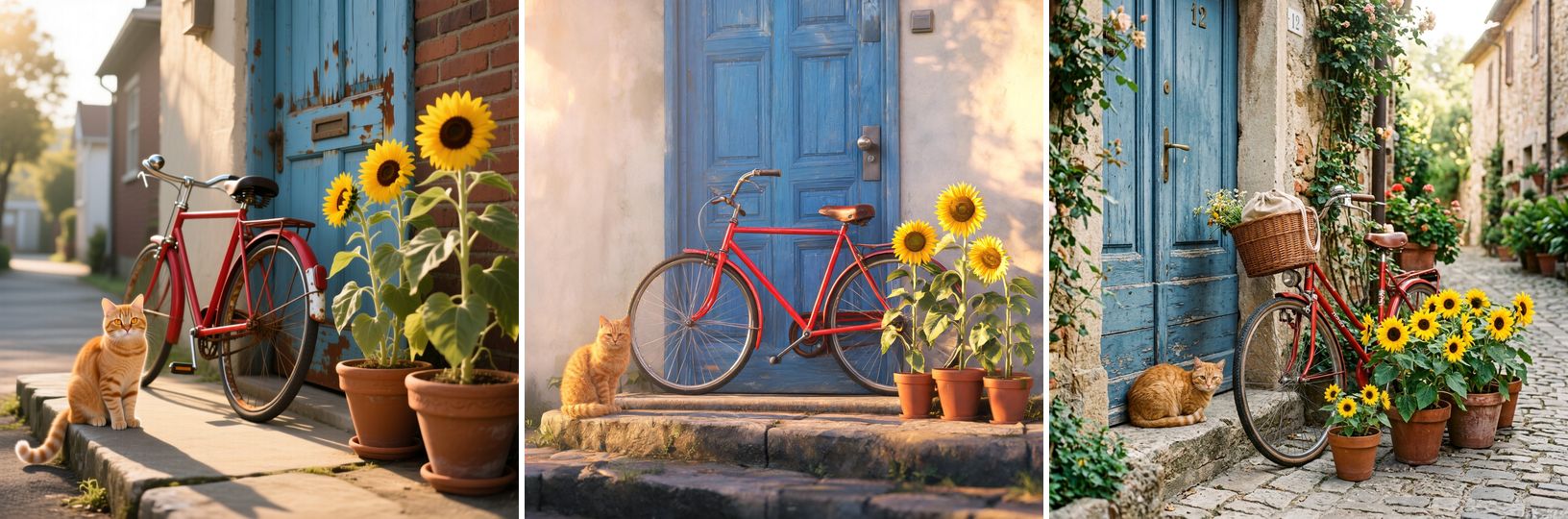
Same result as our last test, now with a third data point. Seedream remains the only model that counts. Qwen undershot, Nano Banana 2 overshot, and both got every other constraint right. Notice the direction of the errors: Nano Banana 2 decorates, Qwen simplifies.
5. Illustration: Qwen skips the watercolor entirely
Children's book illustration of a fox reading a book under a large mushroom in the rain, watercolor texture, soft pastel palette, whimsical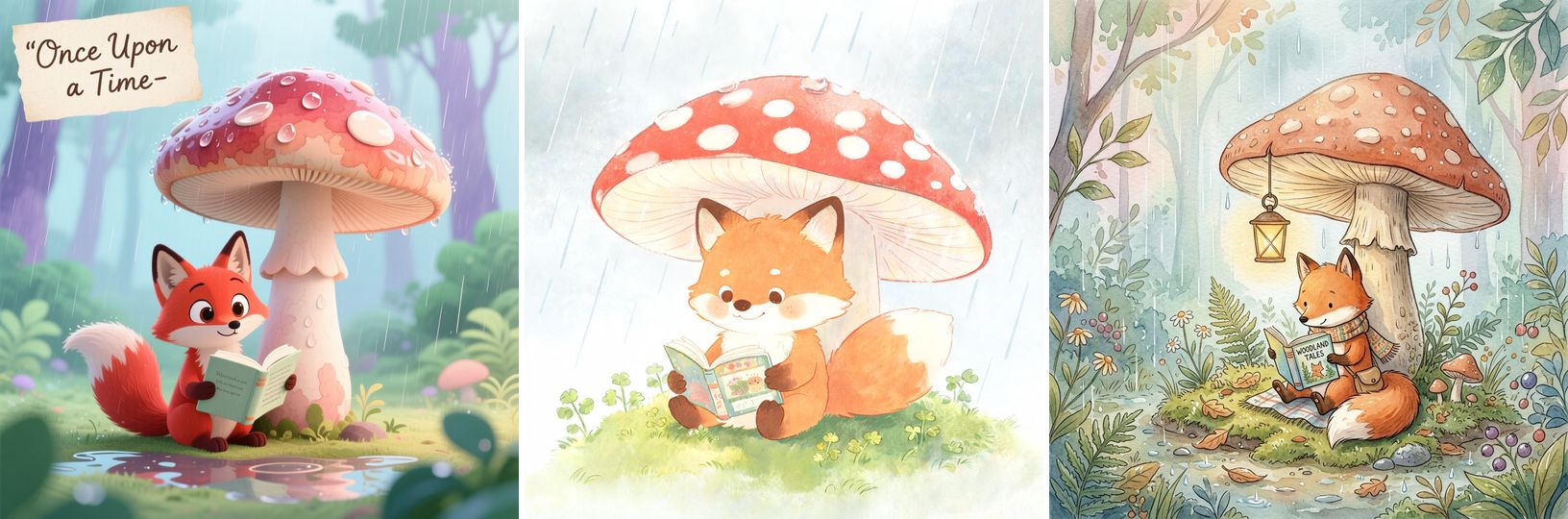
"Watercolor texture" is the core of this prompt and Qwen ignored it, producing something closer to a Pixar still. It also added text again, the second unrequested caption in five rounds. Seedream's restraint wins the brief; Nano Banana 2's density is charming but reads as a different book.
6. Counting: seven, six, and four apples. We asked for five
Exactly five green apples and two yellow pears arranged on a wooden table, overhead shot, one apple has a bite taken out, a folded linen napkin in the corner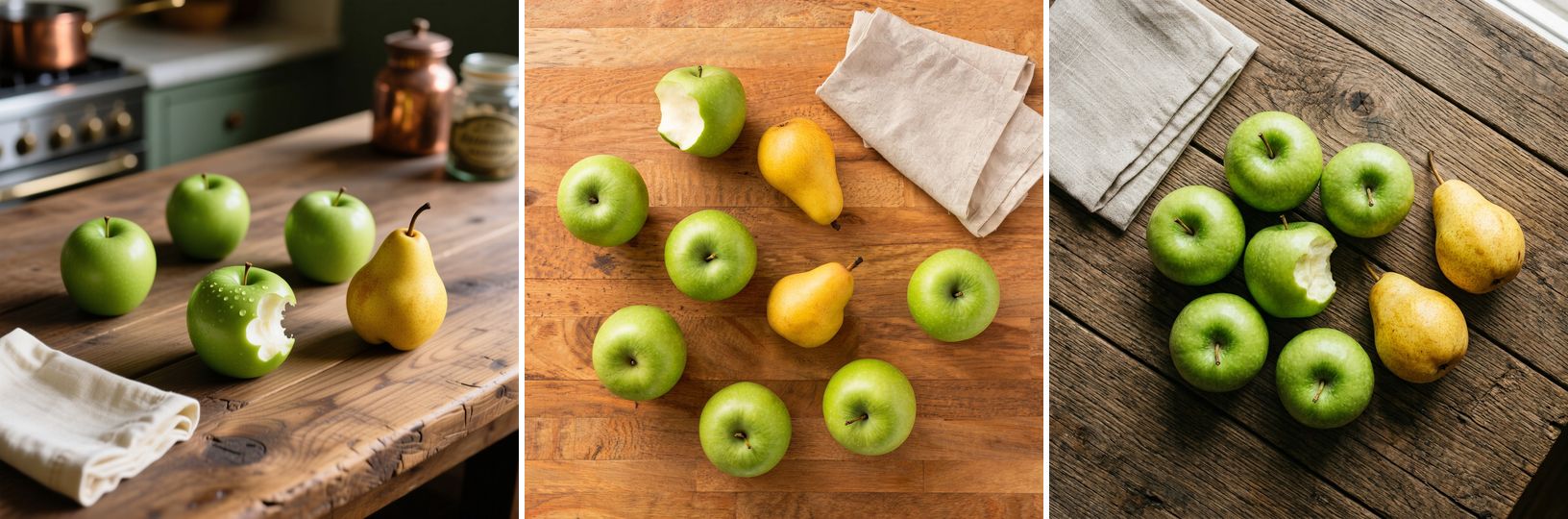
Nobody hit five. Qwen missed hardest: both fruit counts wrong, the only model to ignore "overhead shot", and it invented a whole kitchen backdrop. The pattern from our last test holds with a third model: exact counts above four are a coin flip everywhere, so generate candidates or composite.
7. Cinematic: the flare separates them
Cinematic wide shot of a lone lighthouse on a cliff during a thunderstorm at night, lightning illuminating the waves, anamorphic lens flare, film grain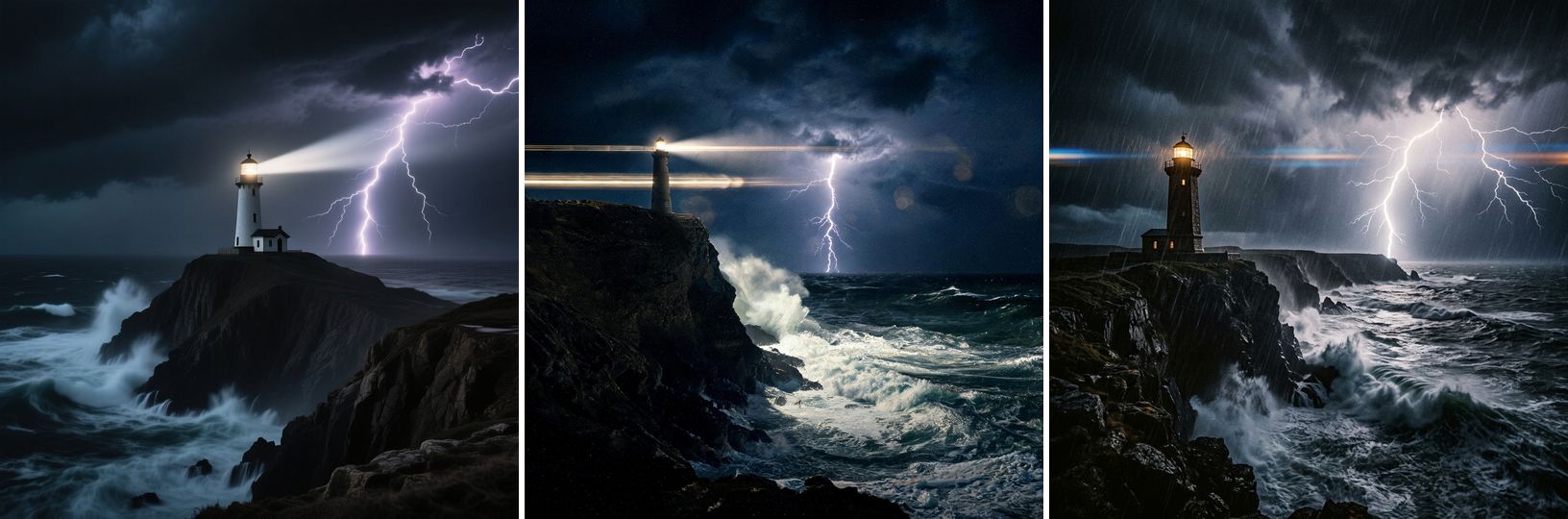
All three are wallpaper material. But the prompt named a specific lens artifact, and only Seedream committed to it. Qwen's frame is arguably the prettiest and the least obedient, which by now is its signature.
8. Street editorial: who is the subject
Fashion editorial photo of a man in an oversized beige trench coat crossing a zebra crossing in Tokyo at dusk, neon signs reflected in wet asphalt, slight motion blur on a passing taxi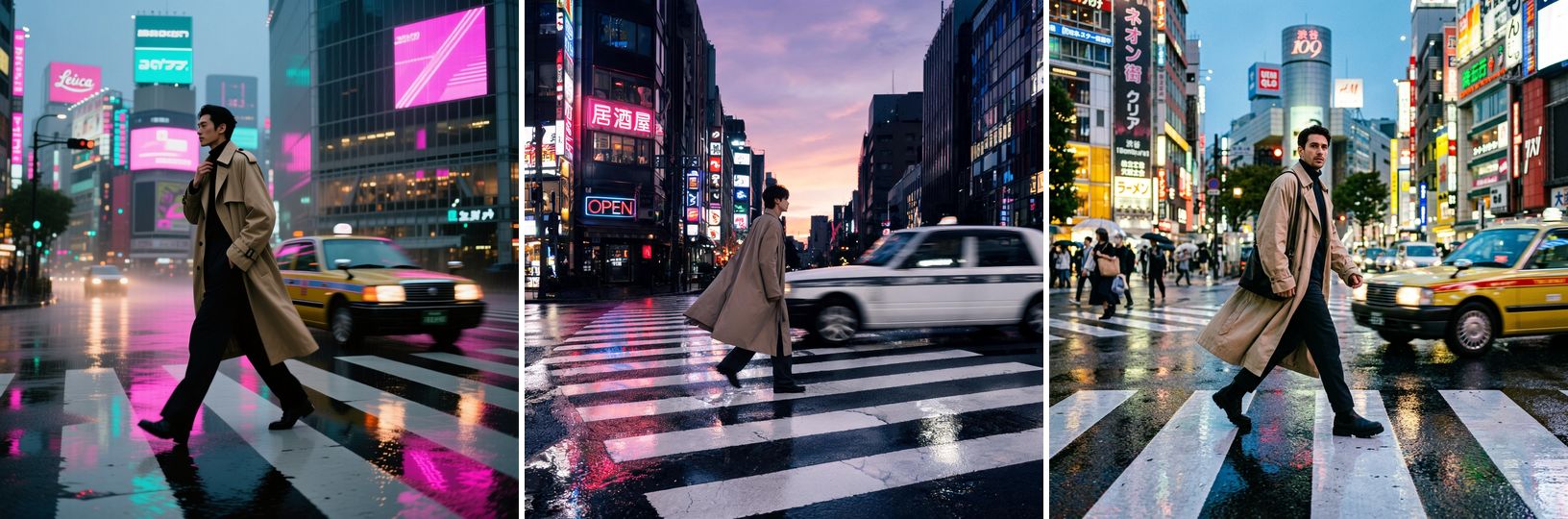
Nano Banana 2 understood that "fashion editorial" makes the person the subject. Qwen lands in between, with the most dramatic neon reflections and a real-brand billboard you would need to paint out before commercial use. Seedream shot the street instead of the man.
9. Editing a portrait: Qwen replaces the person
Reference: Seedream's portrait from round 1, sent to all three models.
Add round tortoiseshell glasses and a mustard yellow knit scarf. Keep her face, expression, hair, lighting and framing exactly the same.This one edits a reference image. Upload yours on the tool page first.
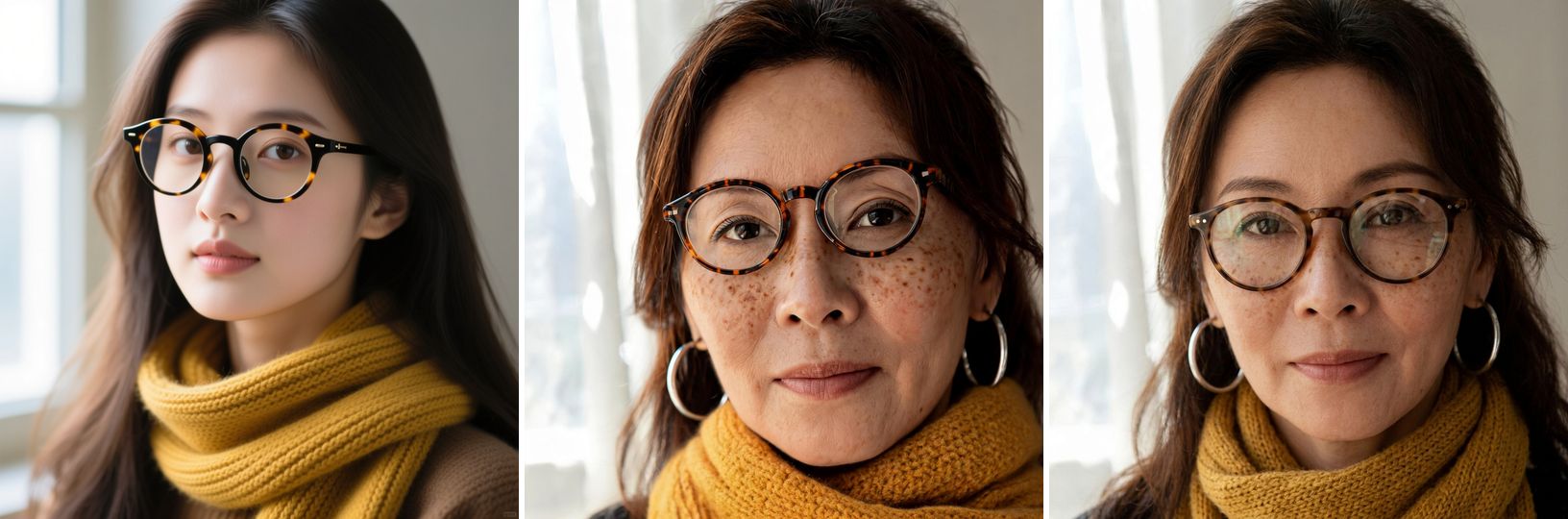
This is disqualifying for one whole use case. The glasses and scarf are there, but the woman is not: our qwen-image route treats image-to-image as "generate a new image loosely inspired by the reference", not as an edit. If identity preservation matters at all, do not send edits to this model.
10. Editing a product: repaint vs recolor
Reference: Nano Banana 2's earbuds case from round 3, sent to all three models.
Change the earbuds case color to matte olive green. Keep everything else identical, including the shadow and reflections.This one edits a reference image. Upload yours on the tool page first.
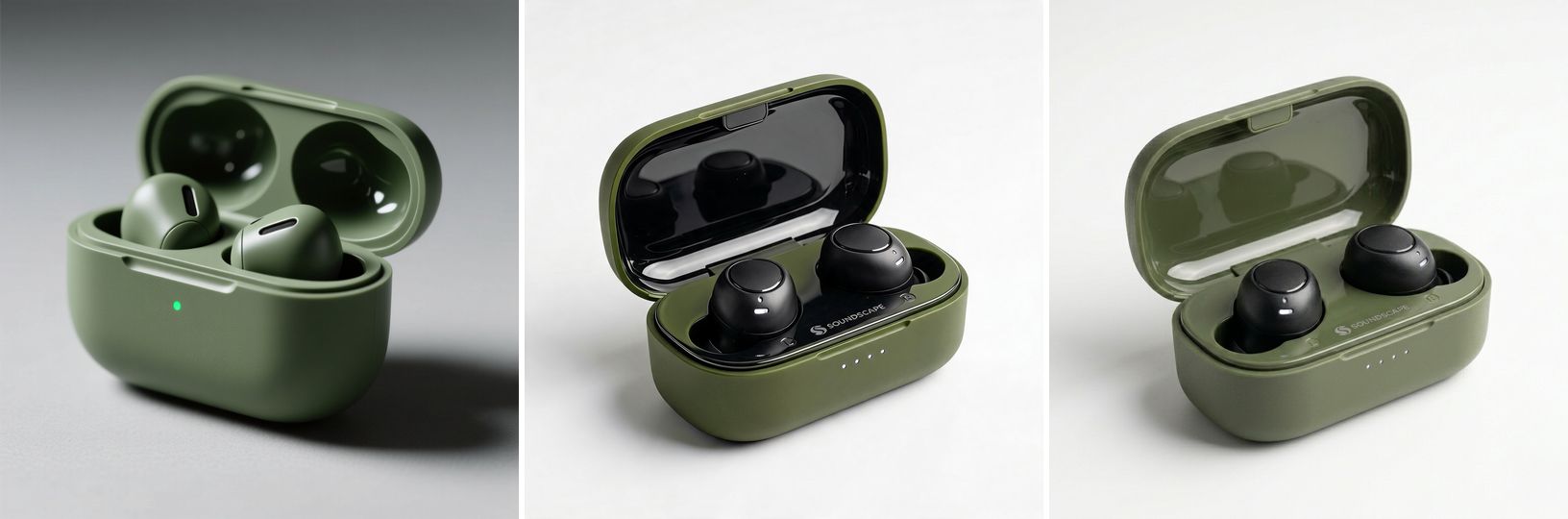
Nano Banana 2's flip-book-perfect swap is still the benchmark. Seedream gives you a half-faithful re-render. Qwen gives you a different photograph of a different object that happens to be olive, and the prompt only asked for the case, not the earbuds. Same verdict as round 9: generation quality, editing behavior.
11. Chinese text: Qwen's actual home turf
A minimalist poster for a Chinese tea house with the exact headline 「山中茶舍」 in large brush calligraphy at the top and the smaller words 「每日现焙,欢迎品茗」 at the bottom, ink wash style, cream and deep green palette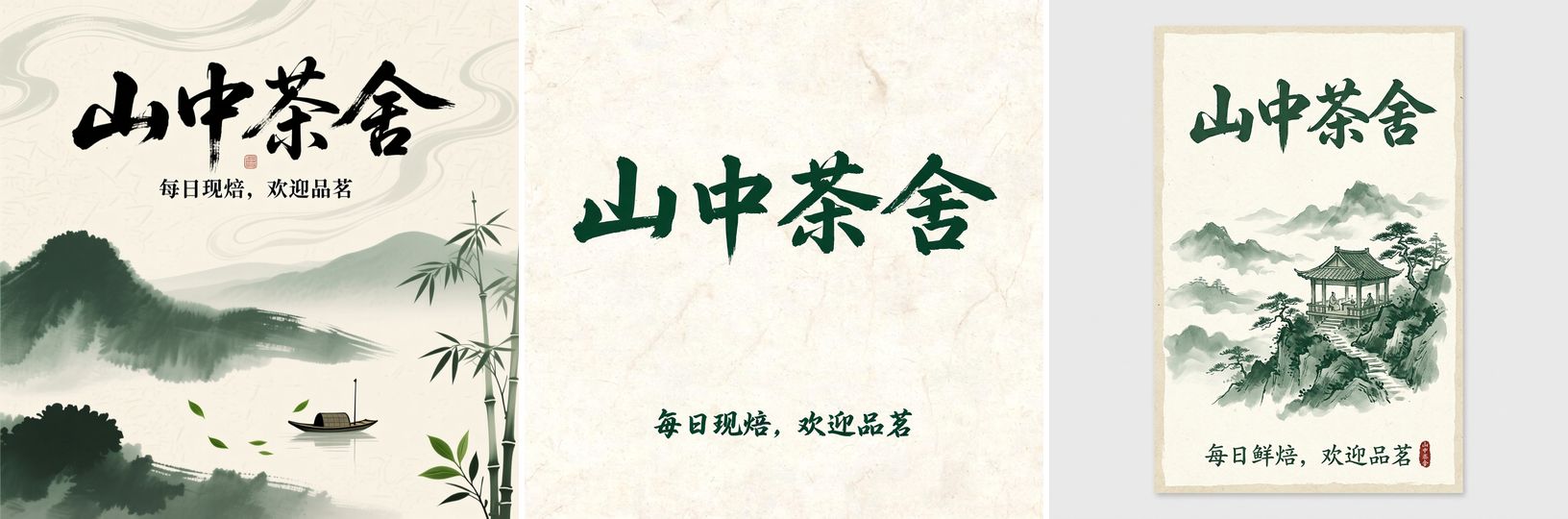
Here the premium finally makes sense. Qwen produced a finished tea-house poster: correct calligraphy with real stroke variation, and the only composition that actually honors "ink wash style". Seedream rendered the characters but skipped the art. Nano Banana 2 misspelled a required word, which in CJK is one wrong character out of eight, the kind of error a client catches instantly. English-language comparisons never run this test; if your work involves Chinese typography, this round alone can justify picking Qwen.
Resolution, on the record
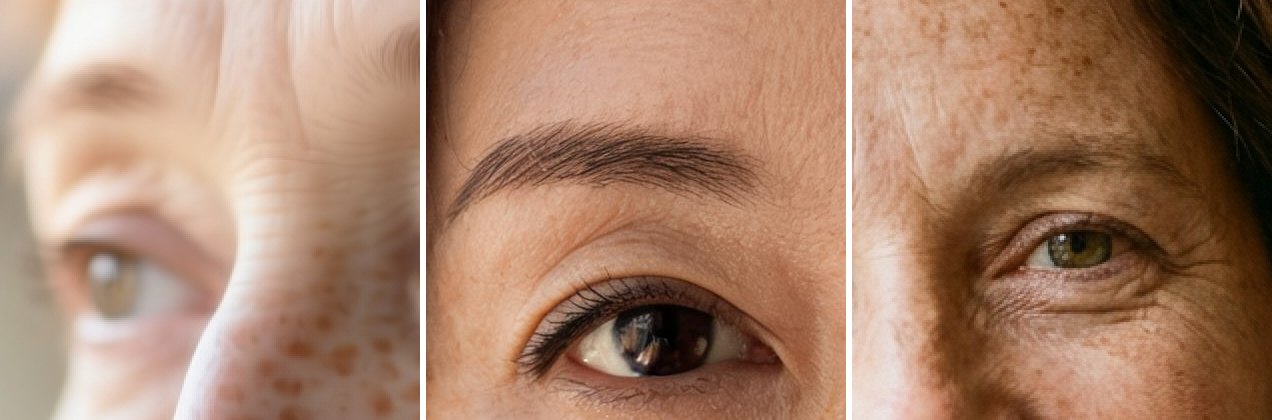
At default settings Qwen Image returns the same 1024×1024 as Nano Banana 2 while charging four times the credits, and Seedream returns four times the pixels for fewer credits than Qwen. Nano Banana 2 now also lists 2K and 4K tiers at 5 and 8 credits, both below Seedream's 9, but we have not measured them, so the crop above is the only 2K evidence in this article. The moment output goes to print or gets cropped, this table is the review.
Scorecard
| Round | What it tests | Qwen Image | Seedream 5.0 Lite | Nano Banana 2 |
|---|---|---|---|---|
| 1 Portrait | realism, framing | strongest light and pose | follows "close-up" | most photographic |
| 2 Text (EN) | spelling, layout | adds phantom typo line | correct, fills canvas | correct, mock-up frame |
| 3 Product | material, background | credible, no fake brand | white but mushy | photoreal, invents logo |
| 4 Spatial | count of three | two pots | exactly three | four plus extras |
| 5 Illustration | watercolor style | 3D render, adds text | closest to the brief | dense, charming |
| 6 Counting | exactly five | four, wrong angle | seven | six |
| 7 Cinematic | anamorphic flare | none | committed streaks | blue flare, HDR |
| 8 Street | editorial subject | in between, real brand | wide street scene | editorial subject |
| 9 Edit portrait | identity | different person | keeps detail | smooths skin |
| 10 Edit product | fidelity | full repaint | half faithful | pixel faithful |
| 11 Chinese text | CJK accuracy, style | flawless, full scene | correct, no scene | one wrong character |
| Resolution | default output | 1024×1024 | 2048×2048 | 1024×1024 |
| Price | credits per image | 12 | 9 | 3 at 1K (5 at 2K, 8 at 4K) |
Which one should you pick
Pick Qwen Image for Chinese typography, and know why you are paying 12. Signage, menus, posters, packaging with CJK text: it was the only model to render every character correctly inside a composition that matches the brief. Its product shot and portrait show real generation talent too. But at 12 credits for 1024px it is a specialist's tool, not a default.
Do not send edits to Qwen Image. Both editing rounds came back repainted, once with a different person. Use image to image with Nano Banana 2 when composition must survive, or Seedream when facial detail must survive.
Seedream 5.0 Lite is the spec-follower, and the only 2K output we have measured. Only correct counter, best style obedience in three rounds, and 2048px for 9 credits. It is no longer the cheapest way to buy pixels, since Nano Banana 2 now lists a 2K tier at 5 credits, but that tier is untested here. Its weakness is unchanged: skin and materials that look rendered.
Nano Banana 2 stays the photographer, and is now the cheapest of the three, with one asterisk. Best portrait and street realism, benchmark-grade edits, and since this test it costs 3 credits at 1K, a quarter of Qwen's price for the same pixels. The asterisk is CJK text: it wrote the wrong character on the one Chinese round, so keep it away from Chinese-language deliverables.
All three run from the same AI image generator workbench, so the practical answer is to route per task rather than crown one model.
Method and limits
- One run per prompt, no re-rolls, every image published. A second seed could flip any single round; it is unlikely to flip the pattern.
- Default parameters only: 1:1 aspect ratio, no resolution override, no negative prompt. We tested what a user gets when they type a prompt and press generate.
- The Seedream 5.0 Lite and Nano Banana 2 images for rounds 1 to 10 are the ones we generated for our previous head-to-head on 2026-08-23, same prompts, same routes, same defaults. Qwen Image ran on 2026-08-26, and round 11 ran fresh on all three models on 2026-08-26.
- Qwen's timings came from a different regional endpoint than the one we ship, so treat them as indicative rather than contractual. Seedream and Nano Banana 2 ran on the exact production paths.
- We host original
qwen-image(August 2025 weights), not Qwen Image 2.0 or 3.0. Conclusions here do not transfer to those newer models. - Images are resized for the side-by-side grids. Originals: 1024×1024 (Qwen, Nano Banana 2) and 2048×2048 (Seedream).
All 3 models in this article, on Vidney
Run the same prompt on all 3 models from this article
Same workbench. Switch the model, rerun the prompt, compare side by side.
Nano Banana 2
$0.044per image
35% cheaper than the official Google API
Official Google API $0.067
Prices at the Creator annual rate. Official price is the API list price published by Google, checked September 5, 2026.