
AI Image Generator
Qwen Image
Generate AI image with Qwen Image: text to image and image to image, all from one Vidney workspace.
Output
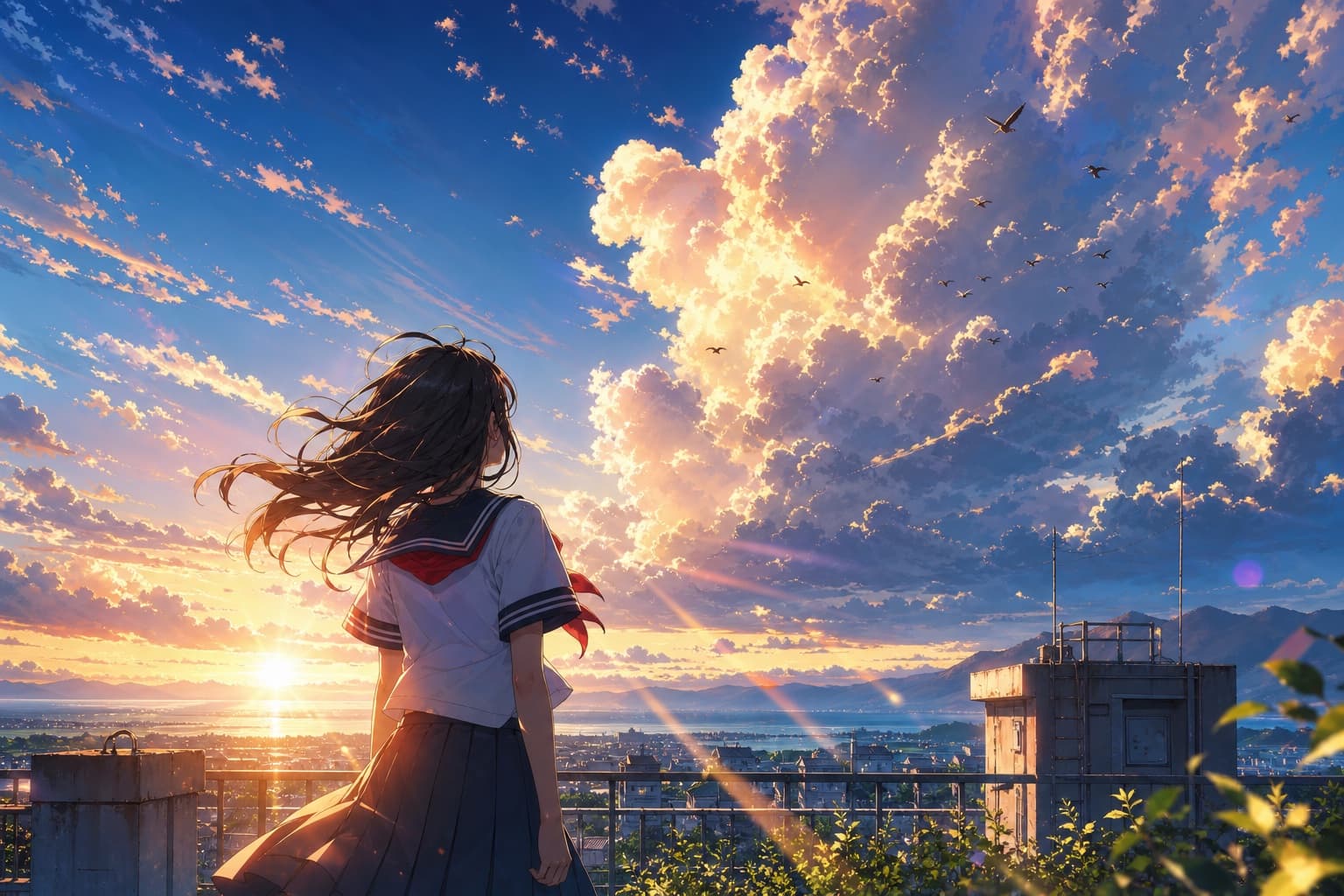
Sample gallery
Real Qwen Image samples are being curated. We don't show fabricated examples; once verified generations are ready, they'll appear here.
Qwen Image key features
Prompt-to-image generation
One prompt returns a finished frame: no canvas, no design software. Change a few words to restage the scene and re-run in seconds.
Consistent, controllable results
Aspect ratios like 1:1, 4:3, 3:4, 16:9, 9:16 fit thumbnails, posts, and print without re-cropping, and identity holds across a whole set of images.
Publish-ready resolution
Sharp detail, accurate color, no Vidney watermark. The frame you generate is the frame you ship.
Every model in one workspace
Qwen Image runs text to image and image to image next to every other major image model: one workspace, one credit balance, no API keys.
What you can create with Qwen Image
Marketing and ad creative
Render ten ad variants in the time it took to brief one designer, then A/B test against real spend. No shoot, no studio.
Social and blog graphics
Batch a week of thumbnails, headers, and quote cards in one session, with one consistent brand look across the series.
Product and e-commerce imagery
Listing shots and lifestyle scenes from the angle that converts, fresh for every SKU instead of recycled supplier photos.
Concept art and design
Explore characters, moodboards, and key visuals in minutes. Pitch finished-looking key art before the budget is locked.
The technology behind Qwen Image
How the model is built and what it was trained to do, drawn from official docs and independent reviews.
Qwen Image is a 20 billion parameter image foundation model from Alibaba's Qwen team, released in August 2025 under the permissive Apache 2.0 license. It uses a Multimodal Diffusion Transformer (MMDiT) architecture: the Qwen2.5-VL vision-language model reads and understands your prompt, and the diffusion transformer turns that understanding into pixels. A positional encoding scheme called MSRoPE lines up text and image information inside the model, which is part of why it scales well to different resolutions.
Its signature skill is rendering readable text inside images, from single words on a sign to multi-line paragraphs on a poster, in both English and Chinese. The team trained this deliberately with a curriculum approach, starting with images containing no text, then simple captions, then gradually scaling up to paragraph-level text, backed by a large pipeline for collecting, filtering, annotating, and synthesizing training data. On release it topped public text-to-image benchmarks including GenEval, DPG, and OneIG-Bench.
The same foundation powers editing, not just generation. A multi-task training setup lets companion Qwen-Image-Edit models change objects, transfer styles, or rewrite text in an existing picture while keeping the rest of the image intact. Because the weights are open, the model also runs locally through ComfyUI, and quantized community versions bring it within reach of consumer GPUs with roughly 8 to 16 GB of VRAM.
The model line has kept moving. A December 2025 update (Qwen-Image-2512) focused on more natural-looking people, with visible skin pores and shading instead of the smoothed, artificial look users had flagged. In February 2026 the team released Qwen-Image-2.0, a leaner 7 billion parameter model that generates at native 2K resolution, accepts prompts up to about 1,000 tokens for text-heavy designs like infographics and slides, and merges generation and editing into a single model.
Sources: arxiv.org · huggingface.co · github.com
Who uses Qwen Image, and what for
Qwen Image fits anyone who needs finished images without a photographer, a designer, or a stock-library subscription. Performance marketers batch ad and product visuals: a DTC team renders a dozen creative variants for one campaign and A/B tests them the same afternoon. E-commerce sellers generate listing shots, lifestyle scenes, and packaging mockups for Amazon, Shopify, and Etsy, refreshing imagery as fast as inventory turns. Content teams produce blog headers, thumbnails, and social graphics that hold a consistent brand look across a whole series. Designers and indie studios explore concept art, characters, and key visuals before committing to a full production. Brands keep one product or character identical across an entire campaign. On Vidney you run Qwen Image next to every other major image model, so you pick the best one per project instead of locking into a single provider.
How to generate image with Qwen Image
Create AI image with Qwen Image on Vidney in three steps.
Qwen Image vs Nano Banana 2 vs Nano Banana Pro vs Seedream 5.0 Lite
Specs side by side with similar models, all runnable on Vidney.
| Qwen Image | Nano Banana 2 | Nano Banana Pro | Seedream 5.0 Lite | |
|---|---|---|---|---|
| Task modes | Text to Image · Image to Image | Text to Image · Image to Image | Text to Image · Image to Image | Text to Image · Image to Image |
| Cost | Cost shown on the generate button | 9 credits per generation | 12 credits per generation | 9 credits per generation |
What creators say about Qwen Image
Recurring themes from public reviews, comparisons and creator write-ups. Both the good and the bad.
What gets praised
Creators consistently praise Qwen Image's text rendering as the best among open models, reliably producing legible posters, signs, and multi-line layouts, including Chinese text that other local models garble.
Strong prompt adherence is a recurring theme in reviews: the model sticks closely to instructions about composition, positioning, and lighting instead of drifting off-prompt like many diffusion models.
The Apache 2.0 license and day-one ComfyUI support earn frequent applause from the local generation community, since quantized versions run on consumer GPUs without restrictive terms.
Common complaints
A common complaint is that people can look waxy or plastic, with overly smooth skin, oversaturated colors, and faces that read as AI-generated, an issue Alibaba itself targeted in the 2512 update.
Others find the original 20B model heavy and slow to run locally, and note that its very literal prompt-following gives less creative variety in artistic or stylized work than competitors.
Related models
More AI image models you can run on Vidney.
Generate AI image with Nano Banana Pro: text to image and image to image, all from one Vidney workspace.
Generate AI image with Seedream 4.5: text to image and image to image, all from one Vidney workspace.
Generate AI image with Nano Banana 2: text to image and image to image, all from one Vidney workspace.
Generate AI image with Seedream 5.0 Lite: text to image and image to image, all from one Vidney workspace.
Generate AI image with Midjourney V7: text to image and image to image, all from one Vidney workspace.
Generate AI image with Nano Banana: text to image and image to image, all from one Vidney workspace.
Frequently asked questions
What is Qwen Image?
Qwen Image is an AI image model you can run on Vidney. It supports text to image and image to image from a single workspace.
What aspect ratios does Qwen Image support?
Qwen Image supports the following aspect ratios: 1:1, 4:3, 3:4, 16:9, 9:16.
Is Qwen Image free to use?
You can start with Qwen Image for free on Vidney using your sign-up credits, no card required to try it. After that each run costs Cost shown on the generate button, and the exact cost is always shown on the generate button before you spend a credit.
Can I use Qwen Image images commercially?
Yes. The images you generate with Qwen Image on Vidney are yours to use in commercial projects: ads, social posts, client work, and product content. You keep the output; Vidney only handles generation and storage.
Does Qwen Image add a watermark?
No. Qwen Image images generated on Vidney are delivered clean, with no Vidney watermark, ready to publish or hand to a client as-is.
What are the best Qwen Image alternatives?
The closest Qwen Image alternatives on Vidney are Nano Banana 2, Nano Banana Pro, and Seedream 5.0 Lite. They all run in the same workspace from one credit balance, so you can run the same prompt on each and compare the results side by side.
Do I need an API key or a provider account to use Qwen Image?
No. Vidney runs Qwen Image for you, so there are no API keys to manage and no separate provider account to set up.